Bambu Lab H2D Reviews: See Why 0 Shoppers Rated It 0 Stars!
Gadget fans rated the Bambu Lab H2D 3d printer 0/5 after 0 reviews. What wowed them? What didn’t? It’s all here.


 Recaptor
 Bambu Lab H2D 3D Printer: Advanced Dual-Extrusion Innovation for Multiple User Levels
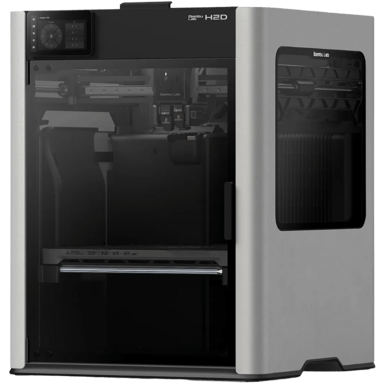
In the ever-evolving world of 3D printing, the Bambu Lab H2D stands out as a hybrid solution designed for both enthusiasts and professionals alike. This FDM/FFF printer targets a broad spectrum of users, from beginners through advanced and professional levels, blending accessibility with sophistication. Built as a kit with upgrade potential, the H2D merges flexibility and performance, backed by measurable features that promise reliable, high-quality output across applications like prototyping, miniatures, and engineering. Its specs present a compelling case for serious users seeking a robust, modern 3D printing platform.
Detailed Specs & Features
On paper, the printer type of FDM/FFF means it uses fused filament deposition, a widely popular and versatile 3D printing method. The dual extruders (two in number) are independently controlled, allowing for multi-material printing; a feature enhanced by support for up to two materials at once. The standard nozzle diameter is 0.4mm, but users can swap in nozzles ranging from 0.2 to 0.8mm, accommodating various levels of detail and speed requirements. The build volume stretches to a generous 1904.72 cubic inches, offering a spacious 12.6-inch width, 11.81-inch depth, and 12.8-inch height dimensions for prints.
Power-wise, it accepts a wide voltage range from 100 to 240 volts, drawing a moderate 350 watts during operation with a standby consumption of just 10 watts, complemented by an energy-saving mode. This efficiency fits comfortably within modern environmental standards. The printer also maintains operating conditions between 50°F and 86°F, with a relative humidity span of 30 to 80%, suitable for most indoor environments.
The compatible materials list is impressive: from PLA and ABS to Nylon, TPU, carbon fiber, and biocompatible materials. This flexibility extends to third-party filaments, alleviating vendor lock-in concerns. Notably, it lacks resin compatibility but supports multi-material printing, maximizing project versatility.
User Experience & Performance (Based on Specs)
Design & Build
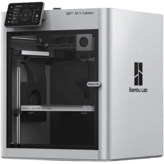
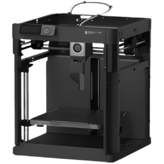
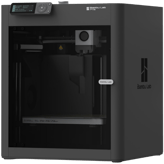
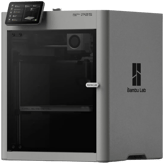
The H2D's physical footprint (about 24.65 inches tall, 20.24 inches wide, and 19.37 inches deep) and a weight of 68.34 pounds classify it as a mid-sized desktop kit. The open enclosure design promotes airflow but foregoes dust or particle filtration seen in enclosed units. However, it counters with features like auto bed leveling, filament runout detection, and print recovery after power loss, which collectively lower user intervention and downtime. The inclusion of a touchscreen display enhances on-device control, paired with a built-in camera and internal lighting for ease of monitoring prints.
Performance
Performance-wise, the printer boasts an auto first layer calibration that simplifies setup, an essential feature for less-experienced users aiming for limited print failure. The specified print success rate of 95% and print quality rating of 9 (out of 10) hint at a reliable and precise output. The heated bed supports temperatures up to 140°C with a minimal temperature gradient, ensuring consistent layer adhesion, while layered resolution can reach as low as 10 microns; details are primarily driven by nozzle size and extrusion precision.
Noise levels are moderate, with operational sound measured at 50 dB, roughly equivalent to a quiet office environment. Vibration compensation and linear rail motion systems underscore the printer's solid mechanical engineering, designed to maintain smooth movements and reduce print artifacts.
Extra Features
Additional goodies enhance professional usability. Included are safety certifications such as CE and FCC, an emergency stop button, overheat protection, and a child-lock mode, which raises the bar in safety compliance, especially for educational or home environments. The printer supports cloud connectivity, enabling remote monitoring and firmware updates, packaged together with proprietary slicer software and mobile app control. For teams or print farms, multi-printer fleet management and multi-user profiles broaden its applicability. Predictive maintenance alerts and self-diagnostics further minimize unexpected downtime and faults, bolstered by real-time print and sensor data logging.
Pros & Cons
Pros
- Robust dual independent extruders supporting multiple filament types
- High print success rate and quality, aided by auto first layer calibration and active error detection
- Comprehensive safety features, including emergency stop and child lock, for peace of mind
- Cloud integration and remote management capabilities suitable for teams and print farms
Cons
- Open frame design lacks enclosure and air filtration, which could affect print material fume management
- Assembly required, which may delay out-of-the-box productivity for some users
- Limited warranty period of one year, relatively short for professional-grade equipment
Price & Value for Money
Offered at $1749 at Bambu Lab Store, the H2D positions itself competitively within the mid to high-end consumer and professional desktop 3D printer segment. Given its striking combination of dual independent extruders, extensive filament compatibility, and digital interactive features, including cloud management and remote access, the pricing feels justified. However, the one-year warranty period may prompt potential buyers to consider extended protection plans, especially for commercial deployments. This printer is well-suited for users who value multi-material versatility and real-time control but may not require immediate enclosed printing conditions.
Quick Take
In short, the Bambu Lab H2D offers a thoughtfully balanced set of features marrying dual extrusion precision with accessible controls and smart monitoring. If we look at the numbers alone, its print quality and material ecosystem make it a strong candidate for serious creatives and small professionals. Its user-friendly automation and safety standards shine as major selling points in a crowded market.
Closing Recommendation
Overall, this printer may be ideal for those seeking a versatile, upgrade-friendly platform that grows with their skills and project demands. The Bambu Lab H2D helps users achieve refined prints in complex workflows, especially when multi-material and safety features are priorities. Prospective buyers should consider the open-frame limitation against their specific environment, but the supported software ecosystem and remote features add undeniable value.
Verdict
Rating: Based on the specifications and overall feature set, we believe Bambu Lab H2D deserves 4.4 out of 5.
- Winner Feature => Dual independent extruders combined with broad material support boost versatility and print quality.
- Needs Improvement => Open enclosure design without air filtration and just one-year warranty could limit appeal in some professional setups.
Reviews 0
The good, the bad, and the brutally honest.Average Rating


More 3D Printers 453
Unlock more awesome finds.